Resuming Training After the Summer Break
Resuming sport dog training after the summer break is a key moment for both the musher and the dogs.
Testimonial from Thibaut Branquart – Excelsior Mushing
Musher and PRO TEAM Nutrition Ambassador

I have been practicing long-distance mushing for more than ten years. This extreme discipline demands both physical and mental preparation, for the musher as well as for the dogs. My Excelsior Mushing team is made up of 12 Alaskan Huskies. I live in Northern France, and every winter I head to Scandinavia to practice my passion, where autonomy, endurance, and a deep connection with the dogs are the keys to success.
I was Vice-World Champion in 2022 on the Polar Distans 300 and finished second on the Amundsen Race 180 in 2024. My most intense experience was running the Finnmarksløpet, a 600-km race far beyond the Arctic Circle.
In addition to physical and mental conditioning, nutrition is a fundamental pillar for performance, recovery, and long-term health. In this blog, I explain how I approach resuming training after the summer break—an important moment in any sport dog training routine.
A Period of Physical and Mental Recovery
Summer is always a season for different activities than training and competition. Still, I try to keep the dogs as active as possible. It remains a period of physical and mental recovery. For example, I like swimming with the dogs or taking one of them on a canoe outing. During this break, I enjoy spending quality one-on-one time with some of them. When temperatures allow—around late August or early September—it is time to resume training. I never train above 14°C.
Easing Back Into Training and Observing the Dogs
This resumption of sport dog training always begins gradually, with free-running sessions and careful observation of the dogs. I start with bike training, letting the dogs run freely around me. This allows us to restart gently, without pulling. It helps build cardio and reactivate the locomotor system. I can observe the dogs’ movement, especially from the side, to ensure their locomotion is optimal. These free sessions help them regain good physical condition and joint function. When needed, my dogs receive osteopathy sessions—throughout the year. These free-running periods are also excellent for building trust between the musher and the dogs. When they are ready, we move on to sled-pulling.
Gradually Adjusting Nutrition
During these weeks, I progressively modify the dogs’ diet toward richer food adapted to increasing effort. In summer, the dogs eat PRO TEAM Puissance 4000, which remains rich enough (20% fat) to keep their digestive system accustomed to assimilating higher-fat kibble. As training duration and intensity increase, I gradually introduce PRO TEAM Endurance 4400. By mid-October, the dogs are exclusively on PRO TEAM Endurance 4400, a highly palatable kibble that keeps them in excellent body condition.
I don’t focus on exact gram amounts, though I do weigh rations regularly to keep track. My goal is to maintain ideal body condition year-round—not too thin, not too heavy. With experience, my eye has sharpened, but I still palpate the dogs’ ribs, flanks, and hips frequently to assess body fat. I adjust rations daily based on workload and individual needs. An 8-year-old neutered male weighing 28 kg won’t eat the same as a 2-year-old 24-kg female.
As temperatures drop and distances increase, I make the diet progressively richer. If in summer I can reduce to one meal per day, during heavier work I switch to two meals to improve digestion. The benefit of PRO TEAM Endurance 4400 is that it is so energy-dense that there’s no need to over-feed.
Good to Know
PRO TEAM Puissance 4000 helps maintain muscle mass thanks to its 30% protein content, and supports energy reserves during calmer periods.
PRO TEAM Endurance 4400 offers high energy density (29% fat) and a lipid profile that supports both effort and physiological functions: salmon oil for recovery and joint comfort, flaxseed for digestion and coat health, and borage oil to support skin and immunity.
Focus on PRO TEAM Endurance 4400
An optimized recipe for dogs performing intense and prolonged work.
At PRO TEAM Nutrition, we have improved the PRO TEAM Endurance 4400 formula to offer even better digestive comfort while maintaining its high-level performance.
This complete diet, designed for endurance and long-distance dogs, combines 33% highly digestible proteins (chicken, fish, egg) and 29% fat to support long, repeated efforts. Rich in L-Carnitine (2000 mg/kg), it promotes fat mobilization as an energy source. Omega-3s (EPA/DHA) support joint protection and muscle recovery, while MOS reinforce the microbiota and immune system.
It is specifically suited for dogs performing long, sustained work: sledding, canicross, hunting, ring work, herding, or rescue missions.
Preparing for Increased Workload
By the end of November, the dogs must be in great condition, able to complete four to five training sessions of more than an hour per week. If everything goes well, they finish training in good shape and are eager to start again after hydration breaks. I always carry a water jerrycan and bowls, stopping as soon as I feel hydration is necessary.
The Importance of Hydration
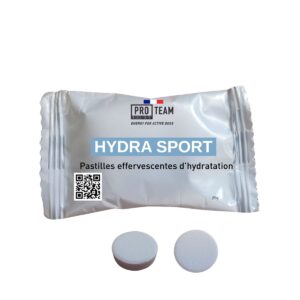
Hydration is a major factor. To make the dogs drink one to one-and-a-half hours before training, I usually prepare soups. But I discovered a highly effective product: PRO TEAM HYDRA SPORT effervescent tablets. These tablets dissolve in water within minutes and make the water more appealing, ensuring my dogs drink easily. This allows me to start sessions knowing hydration is optimal.
Their convenience is remarkable—simple, quick, and clean. I tested multiple bowls with identical water, some containing a piece of tablet. The dogs ignored the plain water and emptied the bowls containing HYDRA SPORT.
The tablet contains rapidly absorbed sugars, glycine (an amino acid important for muscle function and recovery), and electrolytes essential for hydration and muscle balance, with a smoked-ham flavor my dogs love. This unique combination stimulates thirst, improves water retention, and supports muscle recovery. I use the tablets pre-effort, diluted more heavily, and post-effort as well.
My soups vary: sometimes soaking a handful of kibble to flavor the water; in Norway, I make meat-based soups using frozen blocks prepared for sled dogs.
During long-distance runs, hydration helps prevent muscle soreness and digestive issues. We sometimes run 10-hour stretches without being able to rehydrate with water or soup. I use high-moisture pâtés, and the dogs may eat snow, though that can irritate the digestive system and cause vomiting.
Focus on PRO TEAM Hydra Sport
A French innovation for canine athletic hydration.
PRO TEAM Hydra Sport tablets were created to optimize hydration and recovery for athletic dogs before, during, and after effort. They were developed in collaboration with Dr. Maud Clavel, a consultant specialized in animal nutrition. Easy to use, they dissolve instantly in 250–500 mL of water, transforming it into a palatable drink.
Each tablet delivers an effective combination: dextrose for rapid energy and glycogen recovery; glycine for muscle function and antioxidant production; essential electrolytes (sodium, potassium, chloride) to support hydration, muscle contraction, and nerve function.
Made in France, they come in hygienic individual tablets—ideal for travel and competitions. They are a real asset for sport dog training, offering controlled hydration in prevention, during effort, and in recovery.
A Progressive and Individualized Approach
Managing this return-to-training period is essential for the season’s success. I begin with 5-km sessions, increasing distance when the dogs finish easily. When switching to pulling, I focus on power, using heavy loads to rebuild muscle. These sessions are also psychological work, teaching dogs the pleasure of pulling—critical during long races. Again, knowing your dogs and adjusting rest and workload is essential.
The Key Role of Recovery
Training sessions always end with a free-running period around the truck. This is important for recovery and allows me to observe posture, motivation, and wellbeing. Ensuring the dogs stay joyful and maintain a strong will-to-go is crucial. Recovery relies on adapted nutrition, optimal hydration, and regular activity, even on rest days.
Conclusion
A successful resumption of sport dog training relies on patience, nutrition, and shared enjoyment. Dogs must return to work with enthusiasm, in respect of their rhythm and health.
Thibaut Branquart – Musher and PRO TEAM Nutrition Ambassador
Thibaut is available for anyone wishing to discuss canine nutrition or the daily use of PRO TEAM products. You can contact him directly on his social media:
Facebook – Thibaut Branquart – Excelsior Mushing
Instagram – @excelsiormushing
The PRO TEAM Nutrition team is also available for any personalized advice on nutrition, hydration, or sport-dog preparation.
📩 contact@proteam-nutrition.com
If you want to learn more, explore the full PRO TEAM range—kibble and supplements—on our website.